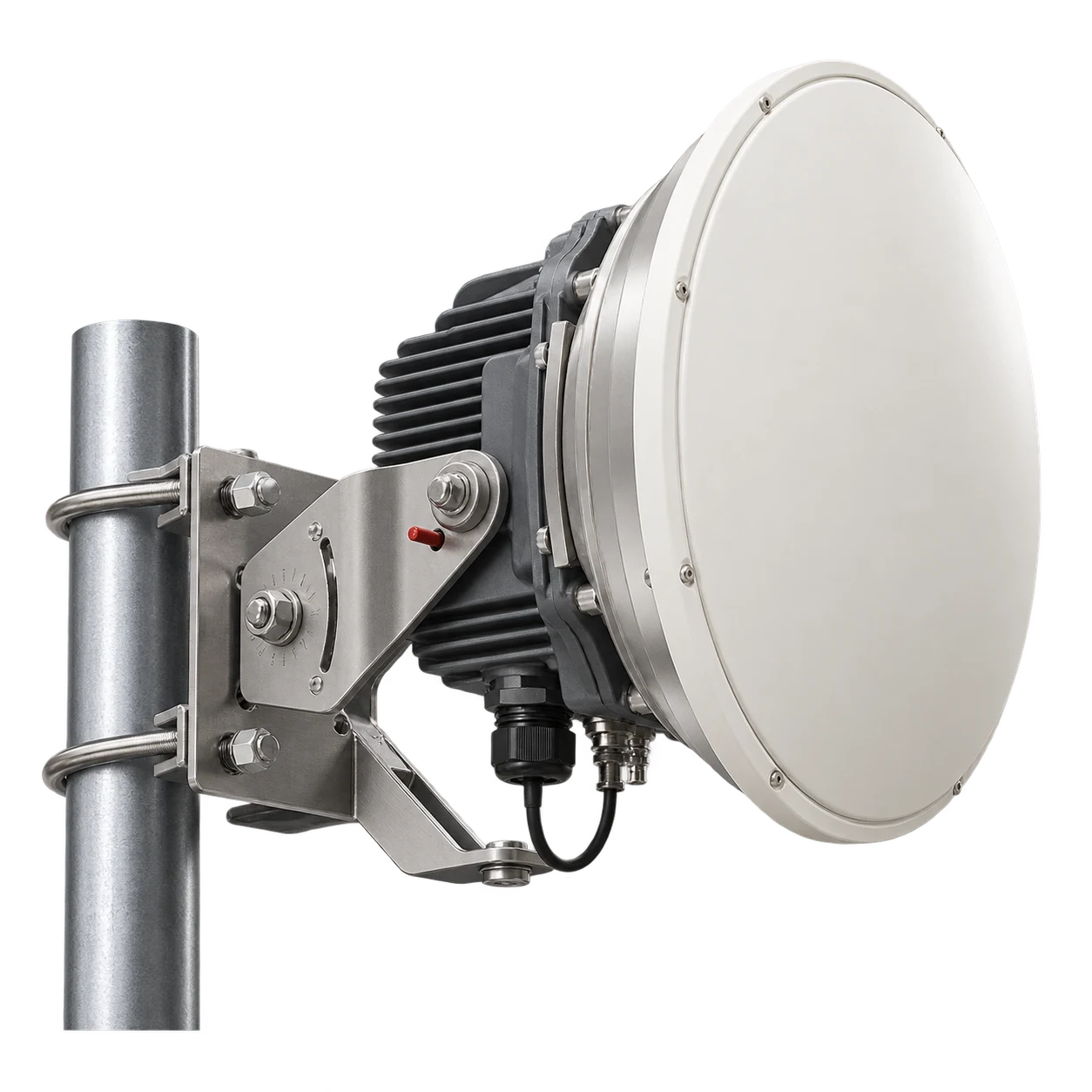
Path
Line of sight, Fresnel zone, height and mounting points.
PTP · mmWave · RF
Connecting buildings and remote sites when fibre is unavailable or impractical, after route and capacity checks.
The system problem
Distance is not enough. Terrain, interference, height, weather, capacity and availability determine whether PTP or mmWave fits.
Design decisions
Line of sight, Fresnel zone, height and mounting points.
Current traffic, growth and latency sensitivity.
Resilience, monitoring and the impact of degradation.
Delivery path
Map the existing environment, constraints and failure points.
Define architecture, coverage, capacity, permissions and scenarios.
Install, label, test and integrate against the approved plan.
Deliver system records, training and a clear lifecycle plan.
Handover
Testing and monitoring outputs depend on vendor, topology and requirements.
Questions before a decision
When wired deployment is unavailable or impractical and path validation shows that requirements can be met.
They are technology families with different frequency, capacity and range characteristics. Selection follows design.
Map the next step